How to Prioritize Tasks at Work When Everything Feels Urgent
How to identify the most important task, allocate working time and handle competing deadlines—with examples, tables and a step-by-step method.

Published ·17.5 min read
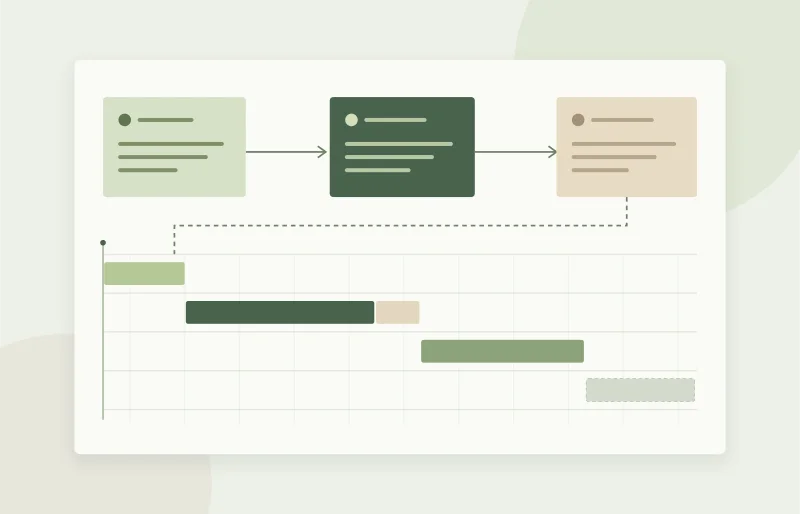
Imagine an ordinary morning at work. You have just opened your email and several messages are already marked “Urgent”. Your manager wants a report before lunch, a colleague is waiting for documents you promised yesterday, and a client needs an answer.
You start on one task, but ten minutes later another message arrives. Then another. An unexpected meeting appears, someone asks for help with a small problem, and the unfinished work keeps growing.
By midday, you have been busy continuously but have barely moved the important tasks forward. You switch between email, documents and conversations, trying to handle everything at once.
Does that sound familiar?
The problem is not always slow work or poor organization. Often, tasks have different deadlines, consequences and dependencies, yet all of them feel equally urgent.
You end up responding to whoever wrote last, whoever asked most insistently, or whichever task looks easiest.
How do you decide what genuinely needs to come first? What can you do when your manager needs one thing, a client expects another, and there simply is not enough time for both?
The answer is to identify real priorities, rather than just make a longer to-do list.
This guide explains how to weigh deadlines, importance and the consequences of delay, allocate working time, and handle competing commitments. Worked examples and tables show how to turn an untidy list into a realistic plan.
1. How do you decide which task to do first?
First, check tasks with imminent firm deadlines, serious consequences if delayed, and dependencies that hold up other work. Then consider each task's duration and the time actually available.
The most urgent task is not always the most important. The most important task does not always have to go first, either.
For example, a quarterly report may matter greatly to the company. But if it is due in two weeks and you have promised to send client documents today, it makes sense to protect today's commitment first.
A deadline alone is not enough to decide. A small task without a formal deadline can still hold up several colleagues and deserve immediate attention.
How to assess a task's priority
| Situation | Priority | Reason |
|---|---|---|
| A client expects an agreed report in one hour | High | An imminent firm deadline and commitment |
| A colleague cannot continue without your data | High | The task blocks the next stage |
| An error is affecting customers using a live service | High | Serious consequences if the delay continues |
| Your manager requests a presentation for next week | Planned | Important, with time available |
| An email arrives without a specific deadline | Needs assessment | Priority depends on its contents |
| Old work files need sorting | Usually low | No imminent substantial consequences |
This does not mean that every client request automatically outranks your manager's work. Priority depends on agreed commitments, decision-making authority and the circumstances.
What should you ask before starting?
Answer four questions for each task:
- When does it actually need to be finished? Establish a specific deadline.
- What happens if it is late? Could it cause financial loss, break a commitment or stop other work?
- Who depends on the result? Can someone else continue without your contribution?
- How long will it take? Can you finish before the deadline?
If those answers are unknown, the task is not yet defined well enough for precise scheduling.
Takeaway: priority comes from the combination of deadline, consequences, dependencies and duration, not from the word “urgent” alone.
2. How can you tell whether a task is genuinely urgent?
Look for a specific deadline and real consequences if it is missed. When no deadline is given, ask when the result is needed and why.
Imagine your manager sends this message:
“We urgently need to update the presentation.”
You stop your current work, spend two hours on it, and then learn that the presentation is not needed until next week.
The update may be important. Without clarifying the deadline, however, you could not compare it properly with your other commitments.
A more useful response would be:
“When does the presentation need to be ready? I am working on the client report due at 14:00. Should I switch to the presentation or finish the report first?”
That is a question about priority, rather than a refusal to work.
Urgency and importance: the difference
| Task type | Example | Response |
|---|---|---|
| Urgent and important | Fix a critical fault in a live service | Act immediately or arrange the response |
| Important but not urgent | Prepare next month's strategic plan | Set aside time in advance |
| Urgent but less consequential | Answer an organizational request with a short deadline | Handle it promptly, delegate or agree an alternative |
| Neither urgent nor consequential | Reorganize old notes with little practical value | Do it when there is spare time |
This distinction is the basis of the familiar Eisenhower Matrix.
The matrix has a limitation: on its own, it does not show how long tasks will take, which depend on one another or whether the whole plan can actually be completed.
It is useful for an initial assessment, but a complicated working day needs a more detailed approach.
Takeaway: before reacting to an urgent request, establish the real deadline and the consequences of delay. Only then decide whether your current plan needs to change.
3. How do you allocate tasks across the working day?
Determine your available working time, subtract compulsory meetings and other fixed activities, then allocate tasks with their deadlines, dependencies and concentration requirements in mind.
A common mistake is to plan eight hours of tasks for an eight-hour working day, forgetting meetings, messages, coordination and unexpected questions.
Suppose your day runs from 09:00 to 17:30, including a 30-minute lunch break.
Of the eight working hours, one hour is taken by compulsory meetings and another is kept for work requests and unplanned tasks.
That leaves six hours for planned work.
If your tasks require nine hours, the problem is a lack of time, not simply the wrong order.
Calculate available working time
| Category | Duration |
|---|---|
| Total working time | 8 hours |
| Compulsory meetings | −1 hour |
| Work requests and reserve | −1 hour |
| Available for planned tasks | 6 hours |
| Duration of all planned tasks | 9 hours |
| Time shortfall | 3 hours |
The 30-minute lunch break is outside those eight working hours. Count breaks separately if your schedule uses a different arrangement.
Reordering tasks cannot make up a three-hour shortfall.
You need one or more decisions:
- Move some tasks to a later date.
- Agree a smaller scope.
- Delegate part of the work.
- Review the deadlines.
- Obtain additional resources.
Where should different tasks go in the schedule?
Consider the nature of the work.
Place demanding tasks in periods with enough uninterrupted time to concentrate.
Short administrative actions can be grouped together if they are not holding up urgent work elsewhere.
Account for meetings with fixed times beforehand, instead of placing them on top of tasks you have already planned.
Takeaway: a useful work plan starts with available hours, not a wish list.
4. Why do tasks that other people depend on matter?
A task can deserve high priority even if it takes only a few minutes, when delaying it holds up colleagues or the next stage of a project.
Consider this situation.
You need to send technical data to a colleague. It will take about 15 minutes.
On its own, this looks like a small task. But your colleague cannot start a two-hour review until the information arrives.
If you leave the message until the end of the day, two work processes are affected.
How dependencies change priority
| Your task | Duration | Work that depends on it | Decision |
|---|---|---|---|
| Send data to a colleague | 15 minutes | A two-hour review | Finish before the review needs to start |
| Approve a layout | 20 minutes | The designer's next stage | Agree the next available time |
| Review a contract | 60 minutes | Sending it to a client | Work backwards from the agreed deadline |
| Update personal notes | 30 minutes | No one else is blocked | Schedule later |
Avoid going to the other extreme, though.
Responding immediately to every request from a colleague can keep interrupting your own work.
Assess the consequences of the dependency, not just its existence.
If your colleague does not need the data until tomorrow, you do not necessarily need to abandon a critical task now.
Takeaway: a short task can be a high priority when it unlocks important work. Check actual times and consequences rather than treating every request as an emergency.
5. What should you do when urgent deadlines conflict?
Calculate which tasks cannot physically be completed on time, explain the constraint, and propose specific changes to the plan.
Suppose it is 11:00.
Your manager expects documents by 13:00. A client report is due at 14:00.
Each task needs two hours.
Even without a break, you cannot complete both by their deadlines.
Decisions when deadlines conflict
| Problem | Unhelpful response | Useful action |
|---|---|---|
| Two tasks have the same deadline | Say nothing and hope to finish | Agree which commitment takes priority |
| There is more work than available time | Try to do everything faster at once | Move, reduce or delegate part of the work |
| Your manager adds an urgent task | Automatically abandon the current task | Ask which task it should replace |
| A colleague repeatedly asks for help | Respond to every message immediately | Agree a time and critical exceptions |
| A task has no known deadline | Treat it as maximally urgent | Ask for a specific deadline |
| Another team is late with an input | Wait until the last moment | Explain the dependency and risk early |
How can you tell your manager about the conflict?
You could say:
“I have two tasks with competing deadlines: the documents by 13:00 and the client report by 14:00. Each needs about two hours. With the time available, I cannot finish both on time. Which should come first? I suggest moving the second deadline or asking someone else to take that task.”
There are three useful elements here:
- You describe the problem with facts.
- You show the time constraint.
- You propose options.
You are helping someone make a decision rather than simply saying that you are busy.
Takeaway: when deadlines cannot fit together, prioritization includes renegotiating commitments. No plan can guarantee work that physically cannot fit.
6. Worked example: prioritize eight tasks across a working day
Now consider a complete working day.
Imagine you work from 09:00 to 17:30, including a 30-minute lunch break. This gives eight working hours, with lunch counted separately.
Assume this fictional day is a Monday.
You start with eight tasks. Some need to be completed today; others can wait.
Step 1. Write down the complete list
| No. | Task | Due | Duration |
|---|---|---|---|
| 1 | Send the client report | Today, 12:00 | 1 h 30 min |
| 2 | Send data to a colleague | Today, 10:00 | 15 min |
| 3 | Prepare a presentation | Tomorrow, 15:00 | 2 h 30 min |
| 4 | Answer routine email | Today | 45 min |
| 5 | Review a contract | Today, 16:00 | 1 h |
| 6 | Attend a compulsory meeting | Today, 11:00 | 30 min |
| 7 | Update internal documentation | Friday | 1 h 30 min |
| 8 | Organize work files | No deadline | 45 min |
| Total duration | 8 h 45 min |
The total already exceeds an eight-hour working day by 45 minutes.
It also leaves no reserve for unexpected requests.
Trying to complete all eight tasks today creates a risk of missing important deadlines.
Step 2. Check consequences and dependencies
| Task | Consequences of delay | Dependencies | Decision |
|---|---|---|---|
| Client report | Miss an agreed deadline | The client expects the result | Today |
| Data for a colleague | The colleague cannot start the review | A direct dependency | Today, before 10:00 |
| Presentation | Risk of missing tomorrow's deadline | None specified | Start today |
| Routine email | Depends on the contents | Unknown | Check and handle important messages |
| Contract review | Delayed approval | The next stage needs the review | Today |
| Compulsory meeting | Miss an agreed event | Meeting participants | At its fixed time |
| Internal documentation | Time remains before Friday | None specified | Postpone |
| Work files | No substantial consequences | None | Postpone |
Assume the client report and contract have agreed hard deadlines and the presentation needs no further approval. In a real situation, verify those assumptions.
Step 3. Build a realistic schedule
| Time | Task | Why now? |
|---|---|---|
| 09:00–09:15 | Send data to the colleague | Unlock the review before 10:00 |
| 09:15–10:45 | Prepare the client report | Finish before 12:00 |
| 10:45–11:00 | Check urgent messages | Identify critical changes |
| 11:00–11:30 | Compulsory meeting | Fixed time |
| 11:30–12:30 | Review the contract | Complete before 16:00 |
| 12:30–13:00 | Lunch break | Not counted as working time |
| 13:00–15:30 | Prepare the presentation | Have the result ready before tomorrow's deadline |
| 15:30–16:00 | Answer the remaining important email | Handle current requests |
| 16:00–17:30 | Reserve and additional work | Respond to changes and unplanned demands |
The report is ready at 10:45, the data has been sent before 10:00, the contract is reviewed before 16:00, and the presentation is finished ahead of tomorrow's deadline.
Internal documentation and file organization are deliberately moved to a later date.
Step 4. Check the result
| Check | Result |
|---|---|
| Today's hard-deadline tasks | Scheduled on time |
| Work holding up a colleague | Completed first |
| Tomorrow's presentation | Included in the plan |
| Less urgent tasks | Postponed |
| Time for unexpected work | Reserved |
| Plan exceeds the working day | No |
The main result: we did not try to finish all eight tasks. We chose a sequence that protects important commitments and leaves room for changes.
That is the purpose of prioritization: to support reasoned decisions rather than turn every day into a race.
Now try this method with your own tasks. Enter your work hours, deadlines and to-do list: the planner will help build a schedule and identify potential conflicts. If selected work needs covering during time off, use the separate vacation handover template.
Illustrative dependency, not a second person scheduled by this single-person tool.
Task Priority Planner
Build a realistic schedule from your hours, deadlines and dependencies. No account needed.
Tasks stay in this browser. Clearing browser data can erase them; export a backup. No cloud sync or background reminders. Avoid confidential company or client details.
Opening your local plan…
7. How can you improve your working day in five steps?
Each day, collect tasks in one place, check real deadlines, identify dependencies, calculate available time, and agree how to resolve conflicts before starting.
You can use this sequence every morning.
Step 1. Collect all tasks
Check email, messages, your calendar, work systems and notes.
Write down all unfinished commitments in one list.
Step 2. Clarify deadlines
For each task, establish:
- The specific date and time it needs to be finished.
- How firm that deadline is.
- What will happen if it is missed.
Ask for clarification when the deadline is unknown.
Step 3. Identify dependencies
Find tasks that other people or processes need before they can move forward.
Check whether the delay is genuinely critical today.
Step 4. Calculate available time
Subtract meetings, compulsory events and a reasonable reserve from the working day.
Compare the remaining time with the duration of your tasks.
Step 5. Agree on conflicts, then start
Choose an order that accounts for deadlines, consequences and dependencies.
If there is not enough time, discuss moving deadlines, delegating or reducing scope before the conflict becomes a missed commitment.
A daily prioritization sequence
| Step | Key question | Result |
|---|---|---|
| 1. Collect | What do I need to do? | One complete list |
| 2. Clarify | When is it actually needed? | Real deadlines |
| 3. Check | Who or what depends on the result? | Clear consequences |
| 4. Calculate | How much time is available? | A realistic workload |
| 5. Agree | What should happen when everything cannot fit? | A workable plan |
You do not need a special app to use this method. A simple table or note is enough to begin.
8. Which mistakes make prioritizing tasks harder?
Even a good task list will not help if the same planning mistakes keep recurring.
Common mistakes and how to address them
| Mistake | Why it causes problems | What to do instead |
|---|---|---|
| Start with the easiest task | Important work runs out of time | Check deadlines and consequences first |
| Treat every message as urgent | Attention keeps switching | Clarify actual urgency |
| Do not estimate duration | The plan becomes unworkable | Add an approximate duration |
| Ignore dependencies | Colleagues' work is delayed | Check tasks that block others |
| Plan without a reserve | Any change disrupts the schedule | Leave time for unexpected work |
| Keep overload to yourself | The conflict is discovered too late | Discuss deadlines early |
| Never revisit the plan | Changed circumstances make it outdated | Update priorities when conditions change materially |
The first mistake deserves particular attention.
Finishing lots of short tasks can feel productive. The number completed does not, by itself, show how useful that work was.
Sometimes one important completed report matters more than twenty low-consequence messages answered.
Takeaway: assess your day by the commitments and outcomes protected, not only the number of boxes checked.
9. How often should you review work priorities?
Check the plan at the start of the working day and revisit it when deadlines, scope, dependencies or available resources change materially.
You do not need to reorder everything after every email.
But a critical task, a cancelled meeting or a late input from someone else may require an adjustment.
When does the plan need a review?
| Situation | Change the plan? |
|---|---|
| An ordinary email arrives | Usually not |
| A critical incident occurs | Yes |
| Your manager changes a deadline | Yes |
| A colleague delays a required input | Possibly; dependent tasks may need a different sequence |
| A cancelled meeting frees an hour | Use it for important work if appropriate |
| A new task has no urgent deadline | Add it to the list and assess it |
| A planned task is completed | Move to the next task, considering current conditions |
Takeaway: a work plan should be steady, but flexible. Its purpose is to help you respond to changes, not prevent them.
10. Frequently asked questions
Which matters more: urgency or importance?
Neither works alone. Urgency describes time constraints; importance describes consequences and the value of the result. Priority comes from combining both with dependencies and available resources.
How can I prioritize without an Eisenhower matrix?
Clarify the deadline, consequences of delay, dependencies and duration. Then compare those details with the other tasks and the working time available.
What if my manager says everything is urgent?
Show the task list, deadlines and time required. Ask for an order of work and agreement on which commitments can move or be reassigned.
How many tasks can I realistically complete in a day?
There is no universal number. It depends on duration and complexity. One person might complete two large tasks; another might finish dozens of short ones. Total workload and the commitments met are more useful measures.
How do I plan when new tasks keep arriving?
Leave a reserve, group non-critical requests, and revisit the plan when conditions change substantially. If new tasks displace agreed work, tell the manager responsible.
Should I do the shortest tasks first?
Not always. A short task can deserve an early slot if it unlocks other work. But doing easy tasks just for a quick result can delay more important commitments.
What if I regularly run out of time?
Record actual task durations for several days and compare them with available working time. If the workload consistently exceeds capacity, the scope, deadlines or resources need to be reviewed.
Conclusion: how should you prioritize tasks at work?
When every task feels urgent, do not start working through them at random.
Use five actions to establish priorities:
- Collect tasks in one list. Do not try to keep all your commitments in your head.
- Establish real deadlines and consequences. Separate firm commitments from requests without a specific time.
- Check dependencies. Identify work that holds up other people or important project stages.
- Compare duration with capacity. Do not build a plan that physically cannot fit.
- Allocate tasks and agree on conflicts. Protect critical commitments first; move, delegate or schedule the rest for a suitable time.
For example, if eight tasks require nine hours and you have only six, the answer is not to try to squeeze nine hours of work into six. Decide which commitments genuinely need to be completed today and agree what can move.
A priority task is not necessarily the loudest, newest or easiest. It is the task that best protects important results and commitments at that moment, within real constraints.
That approach turns a chaotic day into a clear, manageable and workable plan.
Keep exploring
A little more perspective.
Work Handover Before Vacation: A Template and Filled Example
Prepare a vacation handover with task status, deadlines, next steps and agreed owners. Includes a fictional filled example, access checks and a short message.
8 min read ↗
Start a Side Project While Working: A Small First Test
Plan a bounded side project alongside work: define one deliverable, budget time and spending, check employment restrictions and decide what to test next.
4 min read ↗
Prepare for a Salary Review: Build Your Evidence
Turn your work into a clear case for a salary discussion: document contributions, explain changed responsibilities and agree on a useful next step.
5 min read ↗