Meal Prep for Beginners: Start Small and Store Food Safely
Plan a small batch of meals around your actual week. Use a practical checklist, storage decisions and reheating guidance without a restrictive diet plan.

Published ·5 min read
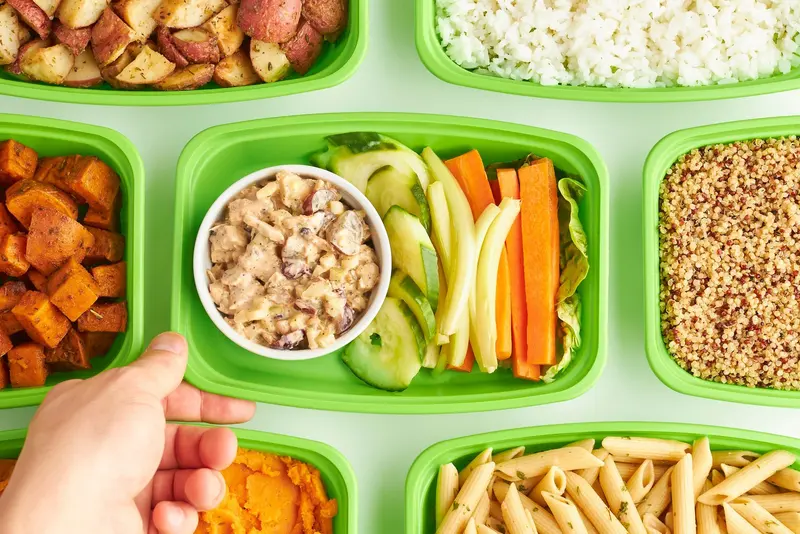
Start meal prep with a small job: make enough for the meals you know you will eat soon, and decide which portions need freezing before you cook. A full fridge is not a plan if your work schedule changes or there is nowhere to keep lunch cold.
This is a guide to organizing and handling food, not a weight-loss menu. The example combinations are editorial illustrations, not recommended portions, calorie targets or a personalized diet.
Plan the storage before the shopping
Write down the meals that actually need covering. Two work lunches and one evening meal are a different task from preparing every meal until Friday. Check fridge and freezer space, suitable containers, and whether food can remain cold on the journey and at your destination.
| Question | Put this in your plan |
|---|---|
| When will I eat it? | Name the intended meal, rather than writing “sometime this week.” |
| Can I keep it cold? | Check transport and storage at work; choose a different arrangement if you cannot. |
| Will I reheat it? | Check access to suitable equipment and a food thermometer. |
| What if plans change? | Identify portions to freeze promptly instead of leaving an extra box in the fridge. |
Containers should be intended for food and suitable for the way you use them. Check freezer and microwave instructions separately; being washable does not establish either. A few shallow containers that fit your storage can be more useful than a large matching set.
Make one small batch useful in different ways
You do not need a row of identical lunches. Keep separately stored components where practical, then combine them in ways you already enjoy. Follow the safety guidance below for every component, including the ones you plan to eat cold.
| What you prepare | One possible use | Another possible use |
|---|---|---|
| A cooked bean dish | Serve with bread | Serve alongside cooked vegetables |
| Roasted vegetables | Add to a warm meal | Add to a chilled meal if cooled and stored safely |
| A sauce you normally make | Use with one meal | Freeze a suitable separate portion for later |
These are organizational options, not a nutritionally complete menu. Match ingredients to allergies, preferences and any professional dietary advice. For the different question of protein needs, use our protein guide. If you are still working out which meals tend to go unplanned, a simple food diary can help you record the routine first.
Clean, separate, cook, chill
Wash hands with soap and water for at least 20 seconds. Keep raw meat and its utensils separate from food that is ready to eat. The FDA organizes home food safety around cleaning, separating, cooking and chilling; preparing several meals does not remove any of those steps. [4]
Use a food thermometer and the appropriate cooking temperature for the food; appearance alone is not a reliable test. Wash produce under running water, but do not wash raw meat or poultry. FDA's meal-prep sheet also directs readers to food-specific storage guidance rather than one deadline for every ingredient. [1]
The cooling step is part of cooking
Divide cooked food into shallow containers for prompt refrigeration. Do not leave a large pot out until it feels completely cold. Refrigerate perishable food within 2 hours, or 1 hour when the surrounding temperature is above 90°F (about 32°C). [2]
Use a refrigerator at 40°F (4°C) or below and a freezer at 0°F (−18°C) or below, following FDA guidance. Check with an appliance thermometer rather than relying only on a dial setting. A normal smell does not establish that food is safe. [3]
How many days can you keep it?
The BfR's meal-prep guidance advises using heated meals within 2–3 days or freezing them; raw components should be eaten within 1 day. These are not permission to keep every food that long: follow shorter food-specific instructions and the actual handling conditions. [5]
| Storage decision | What to do |
|---|---|
| Meal is intended soon | Cool promptly, refrigerate and label it. |
| Meal is for later | Freeze a suitable portion promptly instead of stretching fridge storage. |
| Transport cannot keep it cold | Change the transport/storage arrangement or the meal. |
| You do not know how long it was left out | Do not use smell or a small taste as proof of safety. |
A label should remove guesswork, not manufacture a safety guarantee.
Example container label — fill in for your own food
Dish: cooked bean stew
Prepared: date and time
Stored: refrigerator / freezer
Intended meal: date
Food-specific storage instruction: check before filling this in
Reheat the portion you need
Thaw frozen food in the refrigerator. For leftovers, the FDA specifies reheating to 165°F (about 74°C), checked with a food thermometer. In a microwave, stir or rotate the food and allow the recommended standing time so heating is not confined to the edges. Follow the appliance and food instructions. [2]
Do not use reheating to rescue food that was stored unsafely. Keep the first batch small enough that you can follow each container from cooking to eating without guessing its history.
The BfR cautions that meal prep is less suitable for groups more vulnerable to foodborne illness, including pregnant people, older adults, people with weakened immunity and children under five. If that applies to you or someone you cook for, seek suitable individual food-safety advice. [5]
If you need ongoing help choosing what to eat, compare the support offered by weight-management programmes; organizing containers is not a substitute for individual dietary guidance.
For broader food and activity topics, browse Weight & Fitness. Keep the next batch based on what you actually ate and could store safely, rather than on how impressive the containers looked.
Sources
- FDA. Food Safe Meal Prep Tips. Publication date not provided. Accessed: 2026-09-29.
- FDA. Safe Food Handling. Publication date not provided. Accessed: 2026-09-29.
- FDA. Are You Storing Food Safely?. Publication date not provided. Accessed: 2026-09-29.
- FDA. Food Safety at Home. Publication date not provided. Accessed: 2026-09-29.
- German Federal Institute for Risk Assessment (BfR). Pre-cooking for several days: What should I bear in mind?. Publication date not provided. Accessed: 2026-09-29.
Keep exploring
A little more perspective.
How Much Protein Do Men Really Need?
A practical look at protein, everyday meals, and your individual needs.
2 min read ↗
How to Keep a Food Diary You Can Actually Use
Start a practical food diary with a worked example, reusable template and a way to review patterns. Calorie counting is optional; know when to seek support.
5.5 min read ↗Best Weight Loss Programs for Men
What to look for in support that works with your real life.
4 min read ↗