How to Measure Blood Pressure at Home
Prepare your monitor, sit correctly and keep a useful blood pressure log. Learn what to record, what to ask your clinician and when to seek help.

Published ·3.5 min read
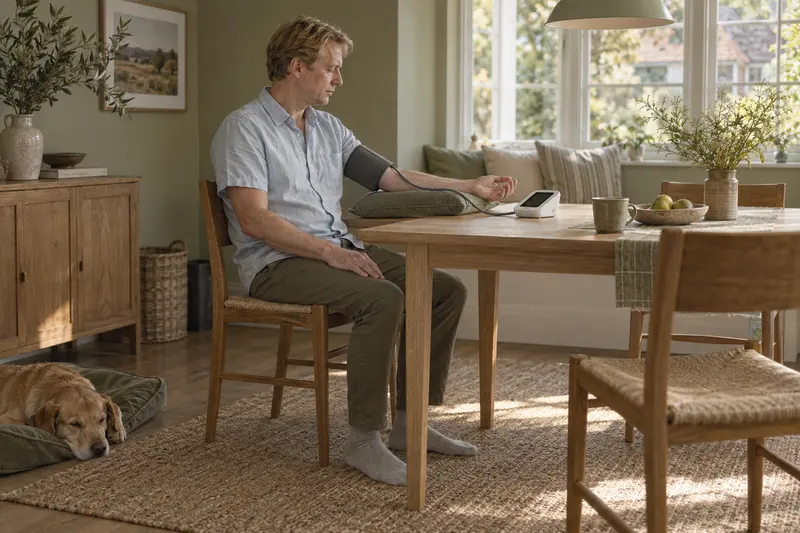
Measuring blood pressure at home is most useful when the routine is repeatable and the results reach the person responsible for your care. This guide helps you prepare a measurement session and a clear record. It is not a way to diagnose yourself from a single number.
Agree on the purpose first
High blood pressure often has no symptoms; feeling well does not tell you the reading. [3] Ask your clinician why you are measuring, which arm to use, when to measure and how to send the results. Record their instructions beside your log so you do not have to remember them later.
You might be collecting a short series before an appointment or following an ongoing plan. Do not choose the length of that plan from somebody else's diary. If your care is online, check how readings will be reviewed; our guide to online men's health services explains questions to ask about clinical follow-up.
Set up a place you can use again
Choose a chair with back support and a table, with the monitor and notebook within reach. Clear enough space that you can sit without balancing the device on your lap. Avoid rushing to fit a measurement between calls.
Before measuring, avoid smoking, caffeine and exercise for 30 minutes; empty your bladder. Rest quietly for 5 minutes. Sit with your back supported, feet flat and legs uncrossed; keep your bare arm supported at heart level and do not talk. [2]
Check the cuff, then take the readings
Follow the device instructions for placement. A cuff that does not fit can distort the result. [4] Do not assume that the cuff supplied in the box suits your arm. Our monitor buying guide separates cuff size, validation and convenience features.
Take 2 readings, 1 minute apart, unless your clinician has given different instructions. Keep both. [1] Wait for the device to finish rather than reaching for your phone mid-measurement. If it shows an error, note the error and follow its troubleshooting instructions instead of treating it as a reading.
Keep a useful log
Use the following blank layout on paper or in a file you can share. A notebook is enough; buying a subscription is not necessary for this task.
| Field | What to enter |
|---|---|
| Date and time | Fill in at the session |
| Arm | The arm agreed with your clinician |
| First reading | Both displayed numbers and the unit |
| Second reading | Both displayed numbers and the unit |
| Context | A brief factual note or device error |
Do not delete an inconvenient result to make the record look better. Keep units with the readings and check copied numbers before sending. Add a short note about a disrupted session without deciding for yourself what caused the result.
Bring the monitor to an appointment so your healthcare team can check technique and compare devices. [5] Ask when they expect your log and who to contact if no reply arrives.
Know the action plan
Ask in advance which readings require a call. Do not stop medication because a home result looks reassuring. If either number is above 180 systolic or 120 diastolic, repeat after at least 1 minute; if still very high, contact a clinician immediately. With chest pain, breathlessness, weakness or difficulty speaking, seek emergency help immediately rather than waiting for another reading. [1]
For everyday activity planning alongside your clinician's advice, see our gradual walking guide and the broader weight-management hub. Neither replaces assessment or a prescribed treatment plan.
Sources
- American Heart Association. Home Blood Pressure Monitoring. Publication date not provided. Accessed: 2026-09-20.
- CDC. Measuring Your Blood Pressure. Published/updated: 2024-05-15. Accessed: 2026-09-20.
- NHS. Blood pressure test. Publication date not provided. Accessed: 2026-09-20.
- American Heart Association. Popular home blood pressure cuffs may not fit millions of adults. Published/updated: 2024-09-06. Accessed: 2026-09-20.
- Mayo Clinic. Get the most out of home blood pressure monitoring. Published/updated: 2026-01-21. Accessed: 2026-09-20.
Keep exploring
A little more perspective.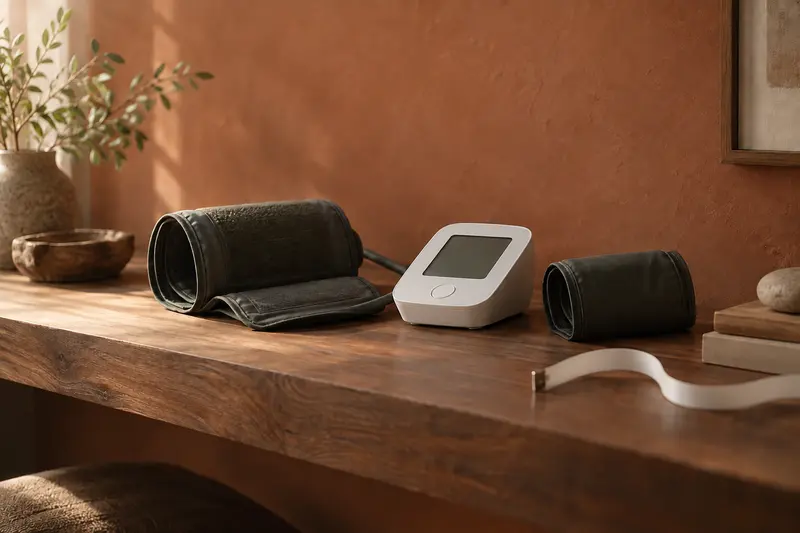
How to Choose a Home Blood Pressure Monitor
Compare upper-arm and wrist monitors, check cuff fit and separate useful features from extras. A practical buying checklist without brand rankings.
3.5 min read ↗
Best Online Men’s Health Services: How to Compare Care
Compare online care formats, clinician credentials, assessment, privacy and follow-up. A practical selection guide without invented provider rankings or prices.
4.5 min read ↗
Walking for Weight Loss: A Plan You Can Adapt
Build a walking routine around your starting point, schedule and recovery. A flexible plan for men, with realistic expectations about weight loss.
3.5 min read ↗