How to Care for Leather Shoes: Start With the Finish
Choose a shoe-care routine by material. Practical steps for smooth leather, separate suede care and drying wet shoes, with clear limits on home treatment.

Published ·4.5 min read
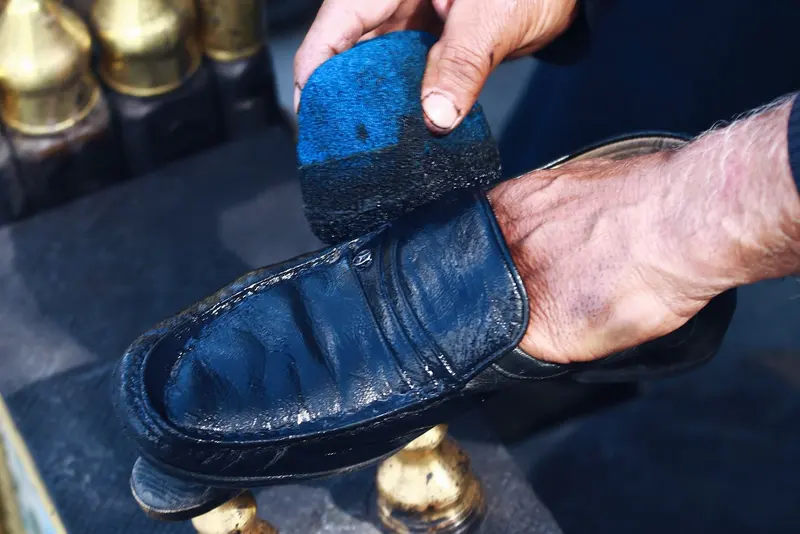
Before cleaning leather shoes, identify the finish. Smooth leather, suede and patent finishes should not automatically receive the same cream, brush or cleaner. Start with the maker's care instructions, remove loose dirt gently, and use only a product intended for that material.
This is a home-care decision guide, not a restoration service or a test of shoe-care brands. It will not turn damaged leather into new leather. A split sole, loose heel or badly damaged upper is a question for a repairer.
Match the tool to the material
| Shoe surface | Start by checking | Avoid assuming |
|---|---|---|
| Smooth leather | Which cleaner and cream the maker permits | That every leather accepts a heavy wax or oil |
| Suede or nubuck | A brush and cleaner approved for that surface | That smooth-leather polish belongs on the nap |
| Patent, coated or unusual finish | Finish-specific instructions | That an ordinary leather routine is suitable |
| Mixed materials | Instructions for each part and the complete shoe | That a product safe on one panel is safe everywhere |
If you cannot identify the material, look up the product specification or ask the retailer. “Leather” is not detailed enough to choose every treatment. Keep a clean cloth and separate brushes for different uses so an old dark polish does not become an unexpected part of the next job.
A restrained routine for smooth leather
Ludwig Reiter's care primer distinguishes leather types and recommends sparing use of suitable polish rather than building up thick layers. It also describes refreshing a finish with a brush or cloth. Use the shoe maker's directions for your pair rather than adopting a fixed polishing calendar. [1]
| Stage | What to do | When to stop |
|---|---|---|
| Prepare | Identify the finish, protect the work surface and remove laces if needed. | You cannot confirm compatibility. |
| Remove loose dirt | Use the appropriate clean brush or cloth gently. | Dirt needs a treatment you have not checked. |
| Apply permitted care | Follow the product's amount, test-area and drying directions. | The finish changes unexpectedly. |
| Finish | Brush or buff as instructed, then inspect in ordinary light. | Further layers would be an attempt to hide damage. |
A shoe cream, conditioner and wax polish are not interchangeable merely because they sit on the same shelf. Read what each is intended to do and which finishes it excludes. There is no need to use every item in a large kit during every clean.
Suede needs a separate approach
Dr. Martens' suede-care guide describes gentle cleaning, air-drying and brushing the dry surface to restore its nap. Its cleaner instructions are for its own product; do not copy an amount or wet-cleaning method onto another product without checking. [2]
| Situation | A useful decision |
|---|---|
| Dry surface looks flattened | Check the maker's brushing instructions and use a suitable suede brush gently. |
| Mark remains after gentle brushing | Identify an approved cleaner instead of escalating to household chemicals. |
| You used a compatible cleaner | Let the shoe dry as directed before the final brushing step. |
| Colour or texture changes unexpectedly | Stop and ask the maker or a repairer. |
Do not pursue a perfect result by scrubbing harder. A mark may need professional attention, and some wear is not removable dirt. A close-up product photograph can make ordinary texture look more alarming than it appears when the shoes are worn.
Wet shoes: make room for drying
Ludwig Reiter advises airing very wet shoes before inserting shoe trees, using absorbent paper where appropriate, and keeping them away from radiators or other heat sources. Its storage advice calls for a dry, airy place and trees that do not stretch the shoe. [1]
Avoid promising yourself that a protective spray makes a shoe waterproof. Follow its material restrictions and application warnings, including ventilation requirements. If the maker advises against a treatment, a generic online tip does not override that.
If these shoes are for work, choose them alongside the permitted clothes. Our business-casual wardrobe guide treats footwear as part of the office outfit, with the actual dress code checked first.
Keep the useful kit, skip the duplicate products
For a particular pair, a suitable brush, clean cloth and the permitted care product may be all you need to begin. Keep instructions with the kit. Label brushes that carry coloured polish and store products safely according to their containers.
Before an occasion, inspect the shoes early enough to allow drying time. That is more reliable than attempting a full treatment just before leaving. For the clothing part of getting ready, our care-label guide explains wash and drying decisions. The grooming-kit guide applies a similar keep-what-you-use approach to personal care.
If the occasion is a first meeting arranged online, the messaging workshop includes a low-pressure invitation example. More everyday guides are collected in Lifestyle.
Sources
- Ludwig Reiter. Shoe Care — A Primer. Publication date not provided. Accessed: 2026-09-25.
- Dr. Martens. So pflegst Du Leder & Wildleder. Publication date not provided. Accessed: 2026-09-25.
Keep exploring
A little more perspective.
How to Read Clothing Care Labels Before Laundry Day
Turn clothing care labels into a wash, drying and ironing plan. Understand the main symbol families and use worked examples without guessing from fabric alone.
5 min read ↗
Men’s Grooming Kit Essentials
Build a practical grooming kit around your beard and hair routine. Compare useful attachments, cleaning requirements and full purchase costs before buying.
4.5 min read ↗
First Messages on Dating Apps: Specific, Natural Examples
Write a first dating-app message with a clear starting point. See original before-and-after examples, follow-up choices and a low-pressure invitation.
5.5 min read ↗