How to Read Clothing Care Labels Before Laundry Day
Turn clothing care labels into a wash, drying and ironing plan. Understand the main symbol families and use worked examples without guessing from fabric alone.

Published ·5 min read
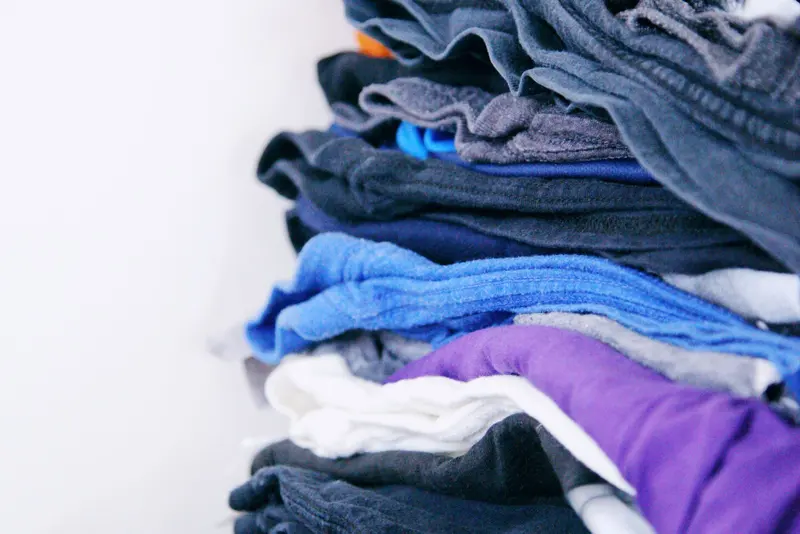
Read the whole care label before choosing a wash programme. The temperature is only part of the instruction: the permitted washing action, bleach, drying and ironing can be just as important. A familiar fabric name does not tell you everything about a finished garment.
Use this guide to turn a label into a practical plan for shirts, knitwear and everyday clothing. The worked examples are Qerano demonstrations, not labels taken from a particular product. We describe symbols in words rather than reproducing a proprietary symbol chart.
Read the five care families
GINETEX's guide describes washing, bleaching, drying, ironing and professional care. Numbers in the wash symbol set a maximum temperature; bars below it call for gentler mechanical treatment. A crossed-out treatment means it is not permitted. [1]
| What you see | The question it answers |
|---|---|
| Wash tub | Can it be washed, at what temperature and with what degree of gentleness? |
| Triangle | Is bleach permitted, and which type? |
| Square, sometimes containing a circle | How may it be dried? A circle inside refers to tumble drying. |
| Iron | Is ironing allowed, and at which heat setting? |
| Circle with professional-care markings | What instructions does a professional cleaner need? |
Do not stop reading after spotting a familiar number. A garment can tolerate a particular wash temperature but still require a gentle cycle and a different drying method from the rest of the load.
Turn the label into a full set of actions
Photograph the label before it fades or before removing an irritating tag. Keep the photo with the garment name, not among an unlabelled collection of tags that will be impossible to identify later.
This is an example of reading, not a universal instruction for shirts. The shirt you own may have entirely different requirements.
Drying needs its own decision
Tumble drying and natural drying are separate instructions. A crossed-out tumble-dry symbol does not, by itself, say whether to hang the item or lay it flat. Look for natural-drying instructions as well. GINETEX distinguishes line and flat drying, including versions requiring shade. [1]
Read your appliance manual when programme names are unclear. “Delicate”, “easy care” and similarly reassuring names are not a substitute for checking what the programme does and whether it suits the garment's label.
Do not guess from fibre content
A shirt may include lining, decoration or a finish that makes its care needs different from another shirt with a similar fibre label. GINETEX specifically says to select the ironing limit from the care label rather than fibre content. Treat letters inside professional-care symbols as information for a cleaner, not a home recipe for solvents. [1]
For a missing or unreadable label, ask the maker using the product name or order reference. If the garment is valuable or the answer remains uncertain, a professional cleaner can assess it. Guessing a hot wash is not a useful test.
Sort by compatible care, not just by colour
The following checklist is a way to organize the instructions you have already read. It cannot override them.
| Before starting | Confirm |
|---|---|
| Care | Items are compatible with the selected wash and drying methods. |
| Colour and loose parts | Follow colour-care instructions; check pockets and fastenings. |
| Detergent | The chosen product meets bleach and other restrictions on the garments. |
| Machine | Programme and load follow the appliance instructions. |
| After washing | A permitted drying space or programme is ready. |
If two garments need different treatment, a convenient mixed load is not a reason to ignore the stricter instruction. Put the uncertain item aside until you can check it.
Knowing the care also helps you choose clothes that will actually be ready on office days. The office-wardrobe guide turns that availability into a small set of compatible outfits.
For used kit on the journey home, the gym-bag packing guide separates transport from washing and drying. A closed return pouch does not replace the care instructions.
Make the routine easy to repeat
Keep a short note for garments you regularly hesitate over: “blue knit—see label photo, dry flat” is enough. Store it where you make the decision, rather than relying on memory on laundry day. You do not need a new product for each garment; first identify what care is actually allowed.
Leather-shoe care follows the same first step—identify the material before selecting a treatment—but shoes should not inherit the settings for a clothes wash. For a manageable personal-care kit, see grooming essentials. If hair products are the next item to simplify, our styling-format guide separates the choices. Browse the wider Lifestyle collection.
Planning to wash clothes while away? Use the packing list with and without laundry to allow clean changes while things dry, rather than counting on the next outfit too soon.
Sources
- GINETEX. Care Symbols — Existing care symbols under ISO 3758:2023. Publication date not provided. Accessed: 2026-09-25.
Keep exploring
A little more perspective.
How to Care for Leather Shoes: Start With the Finish
Choose a shoe-care routine by material. Practical steps for smooth leather, separate suede care and drying wet shoes, with clear limits on home treatment.
4.5 min read ↗
Men’s Grooming Kit Essentials
Build a practical grooming kit around your beard and hair routine. Compare useful attachments, cleaning requirements and full purchase costs before buying.
4.5 min read ↗
Styling Products for Fine Hair: A Practical Guide for Men
Compare powder, clay and mousse by finish and application. A practical styling guide for men with fine hair, without untested product rankings or regrowth claims.
5 min read ↗