The Scale Stopped Moving: Is It Really a Weight Loss Plateau?
A few flat days do not confirm a weight-loss plateau. Compare the weight trend, waist and routine before cutting food or adding harder workouts.

Published ·8.5 min read
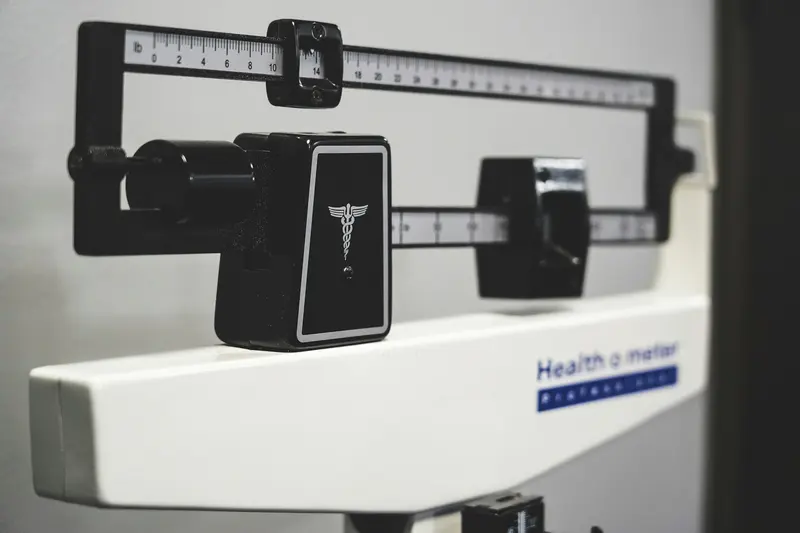
The first weeks look reassuring: 87.4, 86.6, 85.9, 85.1 kg. Then the readings bunch together: 84.7, 84.8, 84.6, 84.9, 84.7. You start wondering whether your metabolism has stopped—and whether dinner needs to get smaller again. These are invented numbers, not a patient's record.
A few flat days do not establish a weight-loss plateau. First compare the longer weight trend with another measure, such as your waist, and check what changed in your routine. A sustained stall deserves a review; it does not automatically call for harsher restriction. This guide offers general education for adults, not a diagnosis or an individual calorie prescription. [1]
The scale weighs more than fat
Body weight includes water, muscle, stored carbohydrate and the contents of your digestive tract. A change in the reading cannot tell you which component changed. Early weight loss can include water released alongside glycogen use; that initial pace need not continue. [2]
| What changed? | Why the reading may be harder to interpret |
|---|---|
| A salty meal or different carbohydrate intake | Water balance and glycogen can change without an equivalent change in fat. |
| A larger or later meal | Gut contents contribute to the weight being measured. |
| New or unusually demanding training | Short-term inflammation and fluid changes can obscure the underlying trend. |
| Resistance training alongside dieting | Changes in lean tissue and fat can move in different directions. |
These are possible explanations, not a way to diagnose water retention from yesterday's menu. The 2026 ISSN position stand specifically recommends separating short-term variation from a genuine stall in fat loss. [1]
Compare trends under similar conditions
Use the same scale on a firm surface and a comparable time and routine. Do not compare a post-dinner reading with your lightest morning. If weighing is comfortable for you, consistent observations can help show direction; daily weighing is optional, not a requirement for everyone.
The ISSN paper suggests trend weight, for example 7–14-day rolling averages, alongside another progress measure. An average smooths noise; it does not measure fat or remove every source of uncertainty. [1]
This fictional weekly example shows why a higher final reading need not mean a higher weekly average:
| Week | Daily readings, kg | Average, kg |
|---|---|---|
| A | 84.8 / 84.6 / 84.9 / 84.7 / 84.5 / 84.8 / 84.6 | 84.7 |
| B | 84.6 / 84.4 / 84.7 / 84.5 / 84.3 / 84.6 / 84.8 | 84.6 |
The averages are rounded. This tiny difference does not establish fat loss; it demonstrates why selecting the last day alone gives a different impression. Keep missing measurements visible rather than inventing them. If your usual recording method is confusing, the food-diary guide explains how to record uncertainty without grading yourself.
Weight stable, waist smaller: what does that tell you?
A consistently smaller waist can be useful context when the scale is flat. Measure at a consistent location and under similar conditions; pulling the tape tighter creates apparent progress. Comparable photos and clothing fit can add context too, provided they do not turn into repeated body checking.
It is possible to lose fat while gaining lean tissue, particularly around the earlier stages of progressive resistance training. But a smaller waist and a stronger lift do not prove exactly how much fat or muscle changed. Training performance is a functional measure, not a body-composition scan. [1]
A practical record might say: “Weight trend broadly stable; waist gradually smaller; training performance improving.” That is more accurate than either “nothing is working” or “every stable week means muscle gain.” Our strength-training log helps you record performance separately.
When a real plateau becomes more plausible
Look for a sustained flat trend, little change in your additional measures, and enough consistency to interpret the observations. The ISSN paper discusses 4–8 weeks as a practical signal for reviewing energy balance or adherence; it also explicitly says there is no official or consensus duration defining a plateau. Do not turn that range into a diagnosis or a reason to delay help for symptoms. [1]
Time since starting a diet is another question. A 2026 narrative review describes why weight loss often slows over the course of a programme. Its literature search ended in January 2025 and it did not formally assess study quality or risk of bias. It supports a multifactorial explanation, not a fixed timetable for your body. [3]
If you have only a handful of measurements after travel, illness or a new training week, the useful next step may be gathering a clearer picture rather than changing the plan immediately.
Why the old plan may stop producing the old result
A smaller body generally needs less energy than a larger one. The intake that produced weight loss earlier may therefore become closer to maintenance. Changes in daily activity and eating patterns also matter; this is a changing system rather than a permanently fixed calorie calculation. [2]
Physiological adaptation can contribute as well. Adaptive thermogenesis means expenditure falls beyond what changes in body composition alone would predict. Its extent varies; it is not inevitable, and it does not mean metabolism has broken or shut down. [1]
The narrative review also describes changes in appetite and non-exercise movement. You might sit more between workouts, stop walking at lunchtime or find the old portions harder to maintain. Those possibilities deserve attention without turning the review into a test of honesty or willpower. [3]
Audit the ordinary week before cutting more food
Look back at what you can actually establish. Have portions changed? Are drinks, cooking additions, sauces, snacks and restaurant meals represented? Does the weekend differ from the workweek? Is daily movement lower even though gym attendance is unchanged? Clinical guidance recommends revisiting food and activity records when progress stalls. [2]
The purpose is to find an actionable difference. “Lunch is now bought between meetings and I don't know the portion” is useful information. “I must have failed” is not. If organisation is the obstacle, beginner meal preparation addresses that task without prescribing a more restrictive diet.
Do not automatically remove another 500 kcal because a chart looks flat. That number is an example of a reflex, not advice. If your plan is already difficult to sustain, a larger restriction may be the wrong problem to solve. First establish the trend, the current routine and whether further loss remains an appropriate goal.
Choose the next step that matches the problem
| What you can establish | A reasonable next conversation or action |
|---|---|
| Only a short run of flat readings | Keep conditions comparable and review a longer trend, if monitoring is appropriate for you. |
| Weight stable, another measure improving | Keep the wider picture; do not assume progress has stopped or calculate fat loss from the tape. |
| The routine has drifted | Restore a workable version of the original routine before making it harsher. |
| Multiple measures stable over time with consistent habits | Review current energy needs, activity and goals; consider a modest, sustainable adjustment with appropriate support. |
| Prolonged dieting feels exhausting | Discuss whether a planned maintenance period or a different goal would be more appropriate. |
Restoring ordinary movement may be more feasible than adding punishing workouts. The walking plan offers a way to organise activity around your week. It does not guarantee a particular change on the scale.
A maintenance phase means deliberately practising weight stability, not abandoning meals to an unlimited cheat day. A systematic review found planned pauses were not clearly better or worse than continuous restriction for weight loss or dropout. A break can be a way to organise a sustainable plan; it is not a proven metabolic reset or a promise of faster subsequent loss. [4]
Qerano Check: what should you review first?
Use this private decision aid to organise observations, not to establish a condition. “Under 2 weeks” is an early-review category, not a medical cutoff. Unknown answers remain uncertainty. The result never calculates calories or decides whether weight loss is suitable for you.
Is this enough information to review the plan?
When support should come before another adjustment
If you have significant obesity, a chronic illness, medication affecting weight, an eating-disorder history, unexplained weight change, marked fatigue or unusual symptoms, discuss the situation with a clinician or registered dietitian. Do not change prescribed medication or wait for a plateau timeframe before asking for help. NIDDK describes professional assessment as the appropriate route for individual health questions; its planning tool is not medical advice. [5]
If weighing or tracking brings rigid rules, meal avoidance, distress or compensatory exercise, pause self-directed tracking and seek support. NHS guidance describes these as possible warning signs requiring assessment, not something a weight chart can diagnose. [6]
For help choosing support, the weight-management programme comparison covers service questions. The wider weight-management collection connects the related practical tasks.
Questions that a flat chart raises
How long does a weight-loss plateau last?
There is no single duration. A short noisy period and a sustained new energy balance are different situations. A practical review window is not a guarantee that the scale will start moving by a deadline. [1]
Can strength improve when weight does not change?
Yes, performance and body weight are different measures. Improved strength can be valuable without proving a particular amount of muscle gain or fat loss. Keep both observations rather than forcing one to explain the other. [1]
Does a cheat day restart metabolism?
Do not treat an unrestricted day as a reset. Research on planned diet pauses does not establish that claim, and a structured maintenance period is a different intervention from an unplanned eating day. [4]
Before making dinner smaller again, establish what has stopped: one reading, the weight trend, your other measures—or the routine that made the plan manageable. That distinction gives your next decision a reason.
Sources
- Journal of the International Society of Sports Nutrition / PubMed. International Society of Sports Nutrition position stand: diets for body weight reduction. Published/updated: 2026-10-13. Accessed: 2026-10-15.
- Mayo Clinic. Getting past a weight-loss plateau. Published/updated: 2024-04-09. Accessed: 2026-10-15.
- Health Science Reports / PubMed. Weight Loss Plateau: Reasons, Challenges, and Solutions: A Narrative Review. Published/updated: 2026-07-15. Accessed: 2026-10-15.
- Obesity / PubMed. Effect of planned pauses versus continuous energy restriction on weight loss and attrition: a systematic review. Published/updated: 2024-01-21. Accessed: 2026-10-15.
- NIDDK. About the Body Weight Planner. Publication date not provided. Accessed: 2026-10-15.
- NHS. Overview – Eating disorders. Publication date not provided. Accessed: 2026-10-15.
Keep exploring
A little more perspective.
Walking for Weight Loss: A Plan You Can Adapt
Build a walking routine around your starting point, schedule and recovery. A flexible plan for men, with realistic expectations about weight loss.
3.5 min read ↗
How to Keep a Food Diary You Can Actually Use
Start a practical food diary with a worked example, reusable template and a way to review patterns. Calorie counting is optional; know when to seek support.
5.5 min read ↗
Best Weight Loss Programs for Men
What to look for in support that works with your real life.
4 min read ↗