How to Trim a Beard at Home
Maintain a beard at home with a conservative approach to length and contours. Learn what to prepare, when to stop and how to follow your trimmer manual.

Published ·4 min read

Trimming a beard at home is easiest to plan as a small maintenance job: keep a shape you already like, remove excess length and stop before you start redesigning it. A dramatic change, intricate fade or unfamiliar outline is a good reason to ask a barber for a starting shape.
This guide concerns cosmetic trimming. Your trimmer's instructions take precedence, including where and how it may be used. Do not use a damaged tool or continue if trimming is uncomfortable.
Set up before you switch on
Use a stable mirror, clear light and a place to put the attachments where they will not fall into a basin. Have your comb, appropriate guard and a towel ready. Charge and operate the device as its manual directs; do not assume it can be used while charging or around water.
Comb the beard into its ordinary shape. The American Academy of Dermatology describes combing as a way to detangle and style a beard and to identify hairs for trimming. Here, it helps you see what you intend to shorten before bringing a tool to your face. [1]
Decide what you are maintaining
An even short beard
Choose a guarded length that leaves more hair than you think you want. Confirm the setting in the manual, secure the attachment and test an inconspicuous area. Check the result before working across the rest of the beard. Follow the manufacturer's guidance on stroke direction rather than assuming one technique fits every tool.
Move in small, controlled sections without pressing hard. Pause, comb the hair back into place and compare the sides in the mirror. Change the setting only after you have checked what the first pass actually removed.
A beard with more length at the chin
Treat the side length and chin shape as separate decisions. Keep the chin out of an all-over shortening pass if you want to preserve it. For a complex transition, keep a barber-established outline and ask which areas you can maintain yourself.
Scissors can tidy a clearly visible stray end, but you do not need them to complete every trim. Use suitable grooming scissors only when you can clearly see and control the cut. Leave uncertain areas alone rather than cutting close to the skin to chase precision.
Tidy the outline conservatively
First inspect the existing cheek line and the area below the jaw. Decide whether you are maintaining an established edge or trying to invent a new one. If you are unsure, preserve more hair and ask a barber to show you a suitable outline at your next visit.
For a moustache, comb the hair into its usual position and take only a small amount from the ends that you clearly want shorter. Use an attachment or tool intended for that task. Do not place an exposed blade near your lip simply because a video makes it look quick.
Avoid the symmetry spiral
Step back from the mirror and look at the whole beard before correcting a small difference. Repeatedly shortening alternate sides can leave both much shorter than intended. Your face, hair direction and growth pattern need not be perfectly symmetrical for the beard to look considered.
If one area is already too short, stop and assess the overall shape. Do not automatically shorten everything else to match. Keep a note of the successful settings so your next maintenance trim starts from a useful reference.
Clean the tool according to its manual
Switch the device off and follow its cleaning instructions. Philips distinguishes washable and non-washable groomers; an attachment that can be rinsed does not establish that the handle can be rinsed. Check the instructions for your exact model before bringing any part near water. [2]
Let cleaned parts dry as instructed before storing them. Put guards back with the device so the next trim does not depend on guessing which loose attachment fits. Replace damaged parts as the manufacturer directs.
Further reading
Sources
- American Academy of Dermatology. A dermatologist’s top tips for a healthy beard. Published/updated: 2021-12-14. Accessed: 2026-09-07.
- Philips. How do I clean my Philips groomer?. Publication date not provided. Accessed: 2026-09-07.
Keep exploring
A little more perspective.
Haircuts for Men with Thinning Hair
Compare short cuts, crops and side parts for thinning hair. Prepare a clear barber brief and choose a style that fits your real daily routine.
4 min read ↗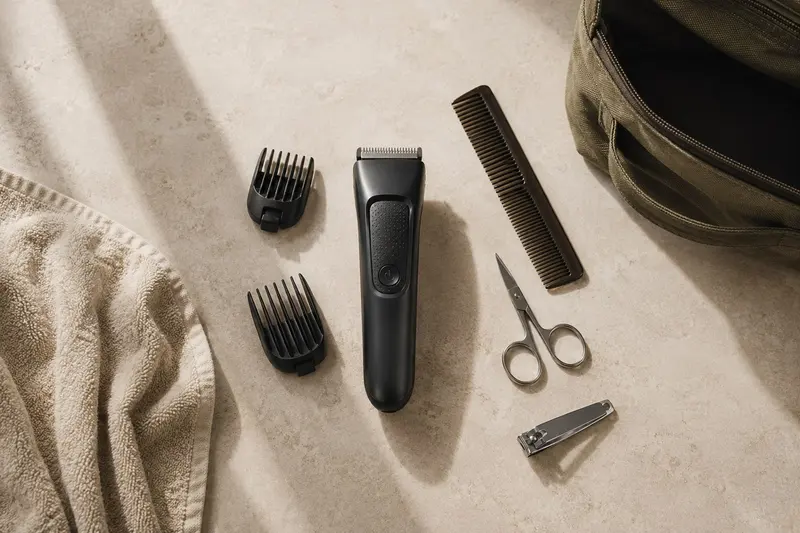
Men’s Grooming Kit Essentials
Build a practical grooming kit around your beard and hair routine. Compare useful attachments, cleaning requirements and full purchase costs before buying.
4 min read ↗
Why Men Lose Hair and What Can Be Done
Understand the possible causes before choosing your next step.
2 min read ↗