How to Return to the Gym After a Long Break—Without Quitting Again a Week Later
Your old lifting numbers can wait. A modest return framework, evening packing checklist and practical ways to make the next visit easier.

Published ·8 min read
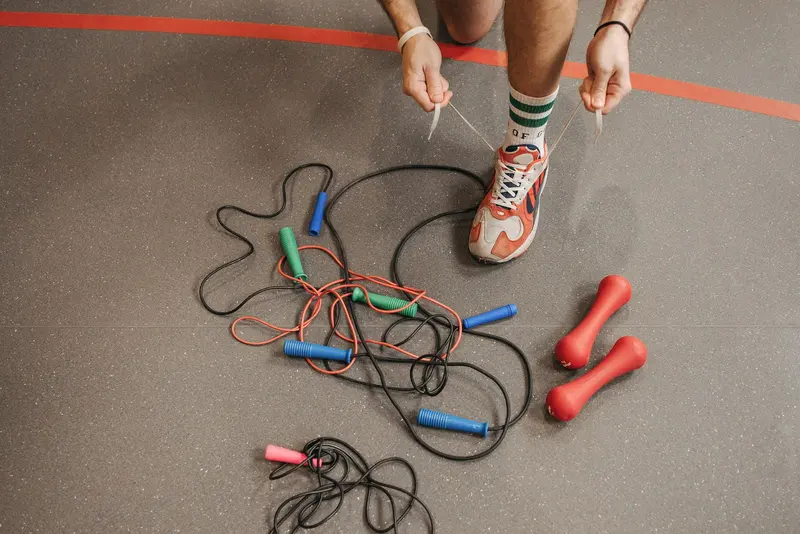
The first workout after a long break is the one most worth keeping deliberately modest. Not because you have forgotten every exercise. Because your head may still be training with the body you remember.
You know the old weights. You remember the programme. The temptation is to prove, on the first evening back, that the gap was not really so large. Then comes an awkward morning on the stairs, a postponed session and the familiar promise to restart next Monday.
That is a recognizable scenario, not a prediction about everyone who returns. The better question for your first visit is simple: what can I do today that leaves a realistic route back in a few days?
Treat the first two weeks as a gentle re-entry, not a deadline to recover your old results. Finishing with “I could have done more” can be entirely appropriate. The calendar below is an illustrative planning framework, not an individual training prescription.
Put your old numbers somewhere you cannot mistake them for instructions
An old personal best records what you did then. It does not choose today's starting load.
Keep the history if you enjoy it, but start a new page in your training log. Record the exercises, actual load, repetitions and how the session felt. Leave space to note how you feel afterwards. You are collecting a current baseline, not marking a disappointing exam.
NHS guidance advises making activity and intensity appropriate to current fitness. After a break caused by injury, surgery, serious illness or persistent pain, discuss the return with a clinician or suitably qualified professional; this general article cannot set rehabilitation limits. [1]
An old programme can still supply familiar exercise names. It should not silently bring back every set, every extra exercise and the expectation that you can finish it all.
Let the first fortnight feel almost too simple
Choose familiar movements, give yourself time to set up and leave room to stop. There is no prize here for reproducing the most demanding version of your previous routine.
NHS strength guidance recommends building up slowly and gradually increasing repetitions over time. That supports a gradual start; it does not establish a universal percentage of your old lifting weights. [2]
If a movement feels unfamiliar, ask a qualified trainer to check the setup and technique. A machine you once used may have been replaced by a different model. Adjust the seat, check the instructions and take the time you need. Our gym etiquette guide covers sharing equipment without feeling you have to rush.
The first week can be useful even when the session looks unimpressive on paper. You found a workable time, remembered the changing-room routine and learned what feels manageable now. Those are pieces of a return you can repeat.
Soreness is information, not the target
Unfamiliar exercise can bring delayed muscle soreness. Soreness is not required to show that a workout was useful, and severe pain should not be treated as a badge of effort. [5]
Do not build the next session around proving you can ignore it. Reduce or pause an activity that causes pain, and seek assessment for severe, worsening or persistent symptoms.
The planning mistake is easier to avoid than the temptation: leave enough space in the diary to notice how you respond before adding more. If recovery is poor, the calendar below is not a command to progress anyway. Returning after an ordinary busy-life break and returning after illness may need very different arrangements.

Photo: Tima Miroshnichenko / Pexels. Illustrative gym scene; not a demonstration of an individualized return programme or exercise technique.
Do not start nine other new lives on the same Monday
Gym membership renewed. Perfect diet. Calorie counting. Ten thousand steps. No sweets. Early bedtime. Supplements. Meal prep. An alarm set earlier than any working day actually requires.
Each item may have its place. Together they turn a straightforward return into a project with nine ways to feel behind. The step count in that list is an example of an all-or-nothing ambition, not a target recommended here.
Choose the gym habit you are trying to rebuild first. Keep meals and other routines workable rather than demanding that everything become ideal before training counts. If food preparation is the actual bottleneck, a modest meal-prep routine may help with logistics; it is not a condition for entering the gym.
A Tuesday session does not become worthless because Wednesday's lunch came from a shop. Avoid using one imperfect choice to cancel another useful one.
Motivation is poor infrastructure
On a motivated Sunday, travelling across town for a beautiful gym sounds reasonable. On a wet Thursday after work, the same journey can decide the evening for you.
Design the ordinary Thursday. Can you go directly from work? Is there somewhere sensible for the bag? Would a closer gym remove an extra journey? Is your planned time actually available, or does it overlap with dinner, caring responsibilities or your commute?
CDC advice emphasizes choosing activities you enjoy and that match your abilities. The practical arrangement below is our editorial application of that principle, not a tested adherence intervention. [3]
Put the visit in a slot that exists in your real week. A pair of repeatable visits can be a better personal starting arrangement than four aspirational appointments followed by none. That is a planning example, not a statement that everyone needs the same frequency.
Pack it the night before
A practical reminder, not an exercise prescription. Ticks stay on this page only; refresh clears them.
A three-week return framework
Example only: the number of visits and the pace may need to be lower or different for you. Do not use the week number as permission to ignore symptoms, rehabilitation advice or recovery. This is an organizer for a conversation and a diary, not a medical programme.
| Stage | Example rhythm | What to find out before moving on |
|---|---|---|
| Week 1 | Around 2 manageable sessions | Which familiar movements and current loads feel controlled? How do you respond afterwards? |
| Week 2 | 2–3 sessions if appropriate; staying at 2 is fine | Can the routine fit again without crowding recovery or the rest of life? |
| Week 3 | Build a sustainable normal routine | Can you keep showing up and make a modest change without losing control or recovery? |
WHO emphasizes that some physical activity is better than none. A manageable start belongs within a wider active life; gym attendance is not the only activity that counts. [4] A comfortable walk can be an option on a day when another gym visit does not fit. It is not a requirement to fill every rest day.
Keep the first programme small enough to understand
Here is a way to organize familiar movements, not a list everyone must perform. Exercise selection, load, sets and repetitions depend on current ability and any relevant limitations. Ask a qualified trainer for help choosing suitable options if you are unsure.
| Movement category | A familiar option someone might discuss with a trainer | What to settle first |
|---|---|---|
| Legs | Sit-to-stand or an appropriate squat variation | Comfortable movement and control |
| Push | Wall press-up or a suitable press machine | Setup and a manageable load |
| Pull | An appropriate row | A controlled movement, without rushing |
| Hips / posterior chain | A suitable hip-hinge variation | Technique and whether the movement suits you |
| Optional extra | Shoulders or arms | Whether it adds anything useful today |
You do not have to include every category on the first visit. Keep the exercise names and a brief alternative in your notes so a busy machine does not turn into twenty minutes of wandering. If a home option is more realistic, bands and dumbbells offer a separate equipment decision, not a reason to abandon movement altogether.
Missing a session does not spoil the week
Suppose Tuesday disappears into a late meeting. The useful response is to find the next realistic slot and check whether the original plan was plausible. It is not automatically to double Thursday's work.
If the same appointment keeps disappearing, change the appointment. If a difficult week is unusual, resume the manageable plan. Neither situation needs a punishment session or a new identity as someone who “always quits.”
Leave your gym bag ready for the next visit. A small logistical reset is more actionable than a large promise about Monday.
Increase the demand when the routine can carry it
Look for familiar, controlled movements, a clearer sense of current loads, ordinary recovery and some consistency across recent weeks. Then consider a modest change in one part of the session rather than adding weight, sets, exercises and visits at once. Gradual progression is consistent with the NHS advice above; no fixed weekly percentage is prescribed here. [2]
If progress means losing the technique, arriving exhausted or repeatedly cancelling the next visit, reconsider the change. There is no requirement to earn an increase just because another week has passed.
For now, the strongest sign of a successful return is not what you lifted on the first visit. It is whether you came back for the tenth.
Sources
- NHS. Physical activity guidelines for adults aged 19 to 64. Publication date not provided. Accessed: 2026-10-14.
- NHS. Strength exercises. Publication date not provided. Accessed: 2026-10-14.
- CDC. Adding Physical Activity as an Adult. Publication date not provided. Accessed: 2026-10-14.
- WHO. Physical activity. Publication date not provided. Accessed: 2026-10-14.
- Cleveland Clinic. Is It Normal To Be Sore After a Workout?. Publication date not provided. Accessed: 2026-10-14.
Keep exploring
A little more perspective.
Gym Etiquette for Beginners: Sharing the Space Well
Learn how to ask about equipment, take turns, leave a station ready and respect filming rules. Practical gym etiquette without pretending to know every machine.
4.5 min read ↗
How to Keep a Strength Training Log: Record and Compare
Record actual sets, reps, load units, effort and useful context. A fictional workout log and comparison table show what changing numbers can — and cannot — tell you.
5.5 min read ↗
What to Pack in a Gym Bag: A Checklist for Your Actual Day
Pack for training, a shower or going straight to work. A conditional checklist separates essentials, club-supplied items and the things you can leave at home.
5.5 min read ↗